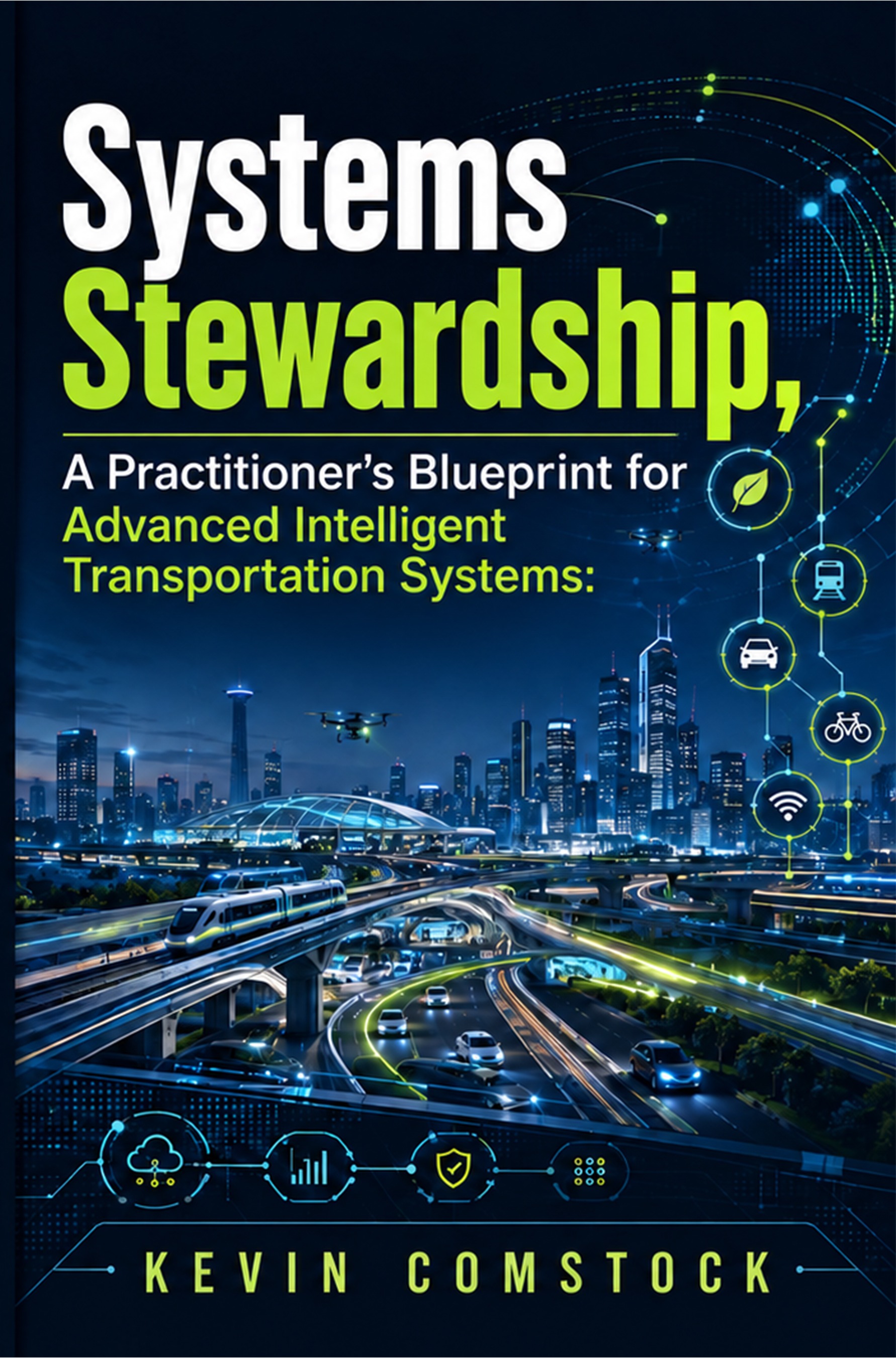
A practitioner's blueprint for advanced intelligent transportation systems
Systems Stewardship
Lifecycle governance, TSMO, smart infrastructure, systems engineering, asset management, and public-sector technology leadership. A transportation system can look finished when a project reaches completion. The people responsible for it know better.
Software needs updates. Equipment reaches the end of its useful life. New systems have to connect with old ones. Staff change. Priorities shift. Budgets get tight. The system still has to work.
The idea behind the book
A transportation system does not become easier to manage because the
project is finished.
Kevin Comstock has spent more than four decades working with traffic signals, ITS, TSMO, telecommunications, connected systems, and public-sector technology programs.
That experience shaped a simple view of transportation technology: getting a system deployed is only one part of the job.
The harder questions come later, like;
- ● Who owns it?
- ● Who operates it?
- ● Who maintains it?
- ● Can the agency still support it five or ten years from now?
- ● What happens when another system needs to connect to it?
Systems Stewardship brings those questions into the planning and engineering process instead of leaving them for someone else to solve later.
Lifecycle Governance
How intelligent transportation systems are planned, procured, operated, maintained, renewed, and eventually retired.
TSMO
The operational discipline required to keep transportation systems working, useful, and responsive once they are in service.
Smart Infrastructure
The physical infrastructure, communications networks, sensors, platforms, and connected technologies that support modern transportation operations.
Systems Engineering
Requirements, architecture, integration, testing, validation, and configuration management that keep complex systems working together.
Asset Management
The practical decisions behind maintaining technology, planning for replacement, managing risk, and protecting long-term public investment.
Public-Sector Leadership
The people, policies, funding decisions, organizational structures, and institutional knowledge needed to keep technology programs viable.

50
years married to his high school sweetheart, Lisa. Together they raised three children and now enjoy five grandchildren.
The practitioner
All About Kevin Comstock
Kevin Comstock has spent more than 44 years working in intelligent transportation systems, transportation systems management and operations, telecommunications, smart city infrastructure, and technology-enabled mobility.
His career started with hands-on traffic signal work and grew into systems engineering, consulting, agency leadership, training, and executive responsibility for large technology programs.
Kevin previously served as Smart City Director for the City of Chattanooga, where his work included connected transportation initiatives, smart corridor development, digital twin efforts, and the institutional side of deploying and operating new technology.
He is now Director of ITS & TSMO in the Technology and Innovation sector at KCI Technologies, Inc., and is an ITE Fellow.
Inside the book
Four Parts. One Practical Problem.
How do you take a transportation technology program from an idea on paper to something an agency can actually operate, maintain, adapt, and support for years?
The Case for Change
Transportation technology has changed faster than many organizations have changed with it. This section looks at the gaps between engineering and operations, projects and programs, physical infrastructure and digital systems, and technical delivery and institutional capability.
The Discipline
Good intentions are not enough for complex transportation systems. This section gets into systems engineering, architecture, interoperability, cybersecurity, validation, configuration management, and the disciplines needed to keep systems under control.
Evidence and Institutions
The book turns to real projects and programs, including work in Chattanooga, to examine what happens when technology, public agencies, private partners, operators, and communities all have a role in the system.
The Road Ahead
Connected vehicles, C-V2X, artificial intelligence, LiDAR, digital twins, and other technologies will continue changing transportation. The challenge is making sure agencies can actually operate and sustain what they adopt.
Who will find this useful
For the People Who Have to Keep It Working
This book is written for professionals who have a stake in what happens after the ribbon-cutting.
State DOT & Agency Leaders
Leaders responsible for transportation technology programs, investment decisions, performance, operations, and long-term system capability.
Smart City & Municipal Directors
Public-sector leaders working across infrastructure, technology, data, mobility, and community priorities.
TSMO & Traffic Operations Engineers
Practitioners responsible for transportation operations, system performance, incident response, technology integration, and continuous improvement.
ITS Consultants & Systems Engineers
Professionals involved in requirements, architecture, systems integration, testing, deployment, cybersecurity, and lifecycle support.
Transit & Toll Authority Executives
Leaders responsible for technology assets, operations, system performance, and the services that transportation users depend on.
Emerging Practitioners
Engineers, planners, technicians, students, educators, and early-career professionals developing the technical perspective and institutional understanding needed to work with increasingly complex transportation systems.
The principle behind the book
Stewardship is what happens after the ribbon-cutting.
A successful ITS program cannot be measured only by whether the system was delivered on schedule or whether the technology worked on opening day.
Explore the BlueprintIt has to keep working - for years to come.